







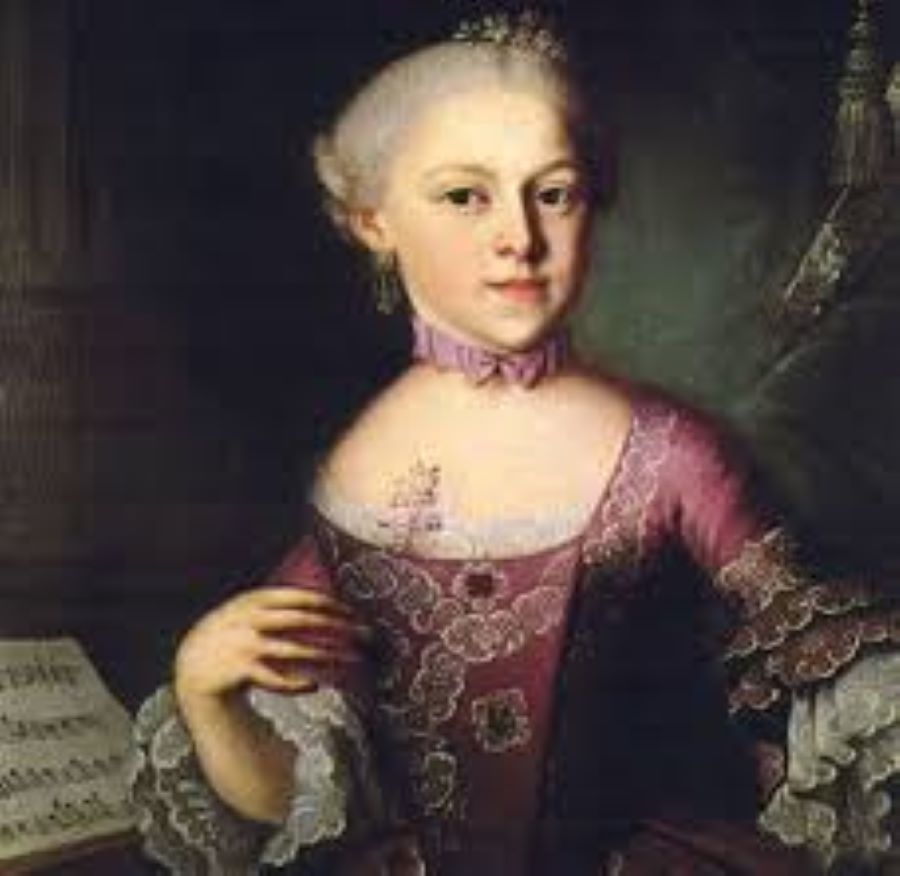
Theresia Constanzia Adelheid Friederike Maria Anna Mozart, commonly known as Nannerl Mozart, was the elder sister of the famous composer Wolfgang Amadeus Mozart. While she might not have garnered the same fame as her younger brother, Nannerl played an essential role in his life and development as a musician. Her story, often overshadowed by Wolfgang’s monumental legacy, sheds light on the challenges women faced in the 18th century, particularly those with musical talent. In this article, we explore the life of Nannerl Mozart, her musical talent, relationship with Wolfgang, and the lasting impact of her legacy.
Early Life and Family Background
Nannerl Mozart, born Maria Anna Walburga Ignatia Mozart in 1751, was the daughter of Leopold Mozart and Anna Maria Pertl. She was born into a family of musicians, with her father being a violinist and composer in the service of the Prince-Archbishop of Salzburg. As the eldest child, Nannerl was exposed to music at an early age. Her father, who was determined to foster the musical talents of his children, began teaching Nannerl to play the harpsichord and the violin when she was very young.
The Mozart family was unique in the 18th century because they had two highly talented children. Nannerl’s younger brother, Wolfgang Amadeus Mozart, was a child prodigy. From a young age, both siblings demonstrated extraordinary musical abilities. They performed in front of European royalty and aristocracy, with Nannerl often accompanying her brother in performances.
Nannerl Mozart’s Musical Talent and Training
Nannerl Mozart was a gifted musician in her own right. Leopold recognized her talent early on and nurtured it, pushing her to play the harpsichord and violin. However, much of her early music career is overshadowed by the spotlight placed on her brother, Wolfgang. During their childhood, Nannerl was often seen as the prodigious young girl who accompanied Wolfgang on tours, concerts, and performances. She played the harpsichord while Wolfgang played the violin, and their performances were often lauded.
Although Nannerl was a talented performer, her opportunities for public performance were much more limited than those of her brother. In the 18th century, societal norms and gender roles restricted women’s public roles, especially in the field of music. As Nannerl matured, she was expected to settle into the traditional role of a woman—managing the household, marrying, and raising children. This limited her ability to continue pursuing a career as a professional musician.
Relationship with Her Brother, Wolfgang Amadeus Mozart
One of the most unique aspects of Nannerl’s life was her close relationship with Wolfgang. As children, they were not only siblings but musical partners. They spent their early years performing together and developing their musical talents. It is said that Nannerl had a profound influence on Wolfgang’s early musical development. Their father, Leopold, was a strict and demanding teacher, and both children were often subject to intense training schedules. Despite this, Nannerl and Wolfgang developed a deep bond through their shared love of music.
Nannerl’s musical knowledge and playing were a source of inspiration for Wolfgang, who frequently praised his sister’s musical abilities. However, as Wolfgang’s career progressed, he began to gain more recognition, while Nannerl’s role in the public eye diminished. Although she was clearly talented, her opportunities were limited due to the prevailing societal norms. Wolfgang’s success, while a source of pride for Nannerl, also made her feel increasingly sidelined, especially as she was no longer allowed to perform in public.
Challenges Faced by Nannerl as a Female Musician
As Nannerl grew older, she was forced to face the difficult reality of being a woman in a male-dominated society. In the 18th century, women were often excluded from professional musical careers, especially those that involved public performance. This was an especially harsh reality for Nannerl, who had the talent to pursue a career as a soloist but was constrained by societal expectations.
Instead of continuing her musical career, Nannerl eventually married a man named Balthasar von Berchtold zu Sonnenburg in 1784. She settled into a more traditional role as a wife and mother, which was expected of women at the time. Though she continued to play music privately, she did not perform in public after her marriage. Her dreams of becoming a renowned musician were sacrificed in favor of family life.
Life After Marriage and Family
After her marriage to Balthasar von Berchtold zu Sonnenburg, Nannerl moved to a more domestic life. They had three children together, but tragically, two of them died at an early age. Nannerl’s life, from that point forward, revolved around her family and raising her children. Though her musical career had been cut short, she continued to support her brother, Wolfgang, and frequently wrote to him. Their correspondence reveals the deep bond between the two, and Nannerl’s admiration and love for her brother never wavered.
Nannerl’s life after marriage was not without its challenges. In addition to the loss of her children, her husband’s financial difficulties caused significant stress. Despite this, Nannerl remained a pillar of strength for her family, and her letters with Wolfgang show the love and respect they had for each other.
Legacy and Historical Recognition
For many years, Nannerl Mozart’s legacy was overshadowed by that of her younger brother. However, in recent years, there has been a growing recognition of Nannerl’s contributions to the musical world. Many historians and musicologists have worked to highlight her role in the development of classical music and her early influence on Wolfgang.
Nannerl Mozart’s story is an important reminder of the challenges women faced in the 18th century, especially those with extraordinary talents. Despite being overshadowed by her brother’s fame, Nannerl’s legacy continues to be rediscovered. In recent decades, scholars and musicians have recognized her as a talented and capable musician who was never given the opportunity to fully realize her potential.
Conclusion
Nannerl Mozart’s life is a powerful story of talent, dedication, and familial love. Though her career was cut short by societal expectations, her contributions to music and her role in supporting her brother Wolfgang’s genius are undeniable. Today, Nannerl’s story serves as a reminder of the challenges faced by women in the classical music world, and the sacrifices many made in order to adhere to social norms. Her legacy, although once overshadowed, is being rediscovered, and Nannerl Mozart is finally receiving the recognition she deserves.
Explore more on our website at BusinessPerch.com


