







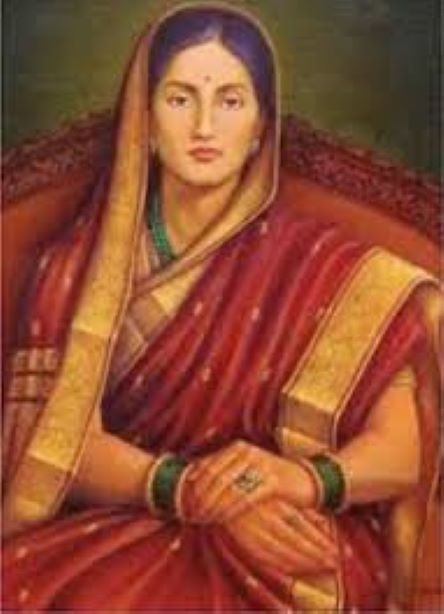
Ambikabai Mahadik, though not as widely known as other historical figures in the Maratha Empire, holds an essential place in the royal lineage of the Bhonsale family. As the daughter of Chhatrapati Shivaji Maharaj, the founder of the Maratha Empire, and Maharani Saibai, Ambikabai’s life was deeply intertwined with the political and military landscape of 17th-century India. While much of her personal life remains a mystery, her role in shaping the Maratha dynasty through strategic alliances and her marriage to Harji Raje Mahadik is crucial to understanding the empire’s complex network of power and influence.
Early Life and Royal Lineage
Ambikabai Mahadik was born into one of the most powerful families in India, as the daughter of Chhatrapati Shivaji Maharaj, a legendary figure known for his military prowess and strategic foresight. Her mother, Maharani Saibai, was the first wife of Shivaji Maharaj and played an important role in the early years of the Maratha Empire. Growing up in such a prestigious and politically charged environment, Ambikabai was exposed to the intricacies of governance and the ongoing struggles between the Marathas and their adversaries, particularly the Mughal Empire.
Ambikabai’s early life was likely filled with royal education and training, preparing her for the future responsibilities she would hold as a member of the Bhonsale family. Her father’s legacy as a warrior king who resisted the mighty Mughals and established the Maratha Empire was undoubtedly a significant influence on her. The Maratha Empire, under Shivaji’s leadership, marked an era of resilience, military strength, and strategic alliances, and Ambikabai’s lineage was at the heart of it all.
Marriage to Harji Raje Mahadik
In 1668, Ambikabai Mahadik was married to Harji Raje Mahadik, a prominent nobleman from the Mahadik clan, known for their allegiance to the Maratha cause. This marriage was not just a union of two individuals, but also a strategic alliance that would benefit both families politically and militarily. The Mahadik clan played an essential role in supporting the Maratha Empire, especially in the western regions of India.
The significance of this marriage extended beyond personal ties—it was a way to strengthen the political and military network of the Maratha Empire. By aligning with the Mahadik family, Shivaji Maharaj was solidifying an important military alliance, ensuring loyalty and support from a powerful clan. Ambikabai’s marriage to Harji Raje Mahadik thus had lasting effects on the stability and expansion of Maratha influence in the region.
Ambikabai’s Role in Maratha Dynasty
Although there are limited historical records about Ambikabai’s personal contributions, her role in the Maratha dynasty can be inferred from the political alliances her marriage helped to secure. As the daughter of Shivaji Maharaj, she would have been part of the broader network of royal family members who helped strengthen the Maratha Empire through strategic marriages and alliances.
The Maratha Empire, during Shivaji Maharaj’s reign and beyond, was built on a foundation of alliances, military conquests, and effective governance. Ambikabai’s marriage to Harji Raje Mahadik played a crucial role in cementing the ties between important Maratha families. These dynastic connections were key to the empire’s success in maintaining power against external forces, such as the Mughals and the Bijapur Sultanate, while also stabilizing internal governance.
Ambikabai’s presence within the royal family further underscored the role of women in the Maratha court, even if their personal achievements were not always documented in historical texts. Women like Ambikabai played significant diplomatic roles by securing key alliances through marriage, which in turn, bolstered the empire’s influence and territorial holdings.
The Legacy of Ambikabai Mahadik
Ambikabai Mahadik’s legacy, while not as extensively recorded as some other figures in Maratha history, is nonetheless significant. Her marriage to Harji Raje Mahadik strengthened the Maratha dynasty’s connections with powerful local families, fostering unity and cooperation in the face of external threats. While her direct political influence may not have been as pronounced as other women in the royal family, her role in preserving the family’s power through strategic marriage cannot be understated.
Through this marriage, the Mahadik clan gained considerable favor within the Maratha Empire, and Ambikabai’s children would have carried on the legacy of both the Bhonsale and Mahadik families. As a symbol of dynastic continuity, her legacy represents the strong network of alliances that defined the success of the Maratha Empire.
Challenges and Contributions of Women in the Maratha Empire
Women in the Maratha Empire, though often not in the limelight, played crucial roles in maintaining the empire’s power structure. Ambikabai Mahadik’s life exemplifies the role of royal women in diplomacy and governance. Women of the Maratha dynasty were not only instrumental in securing alliances but also participated in the administration of the empire.
While there are few direct records of Ambikabai’s political contributions, women like her were likely involved in courtly affairs, advising kings and princes, and supporting military strategies. Their contributions were vital to the Maratha Empire’s resilience, as they ensured the continuity of the royal family and its alliances.
The Maratha Empire in the 17th Century
The 17th century was a pivotal period for the Maratha Empire, marked by constant battles and alliances. Under Chhatrapati Shivaji Maharaj, the empire successfully resisted the Mughal Empire and expanded its territories. The formation of strong alliances through marriage, including that of Ambikabai Mahadik to Harji Raje Mahadik, helped ensure the stability of the empire. This period also saw the rise of powerful figures within the Maratha court, as well as the consolidation of military power in the western Deccan region.
The Maratha Empire’s success during the 17th century was driven by its decentralized system of governance, with various families and military leaders holding significant influence. Ambikabai’s family, the Bhonsales, were central to this power structure, and her marriage reinforced this network of influence.
Conclusion
Ambikabai Mahadik’s life, while not as extensively documented as other figures in Maratha history, is a testament to the important role women played in shaping the destiny of the Maratha Empire. Her marriage to Harji Raje Mahadik was a strategic alliance that strengthened the empire’s political and military standing. As the daughter of Shivaji Maharaj, she embodied the continuity of the Maratha dynasty and played a part in ensuring its success.
Through Ambikabai’s story, we see how strategic marriages, alliances, and the influence of royal women were central to the expansion and stability of the Maratha Empire. Her legacy, though subtle, continues to be a symbol of the resilience and strategic foresight that characterized the Maratha dynasty.
Also Read:


