

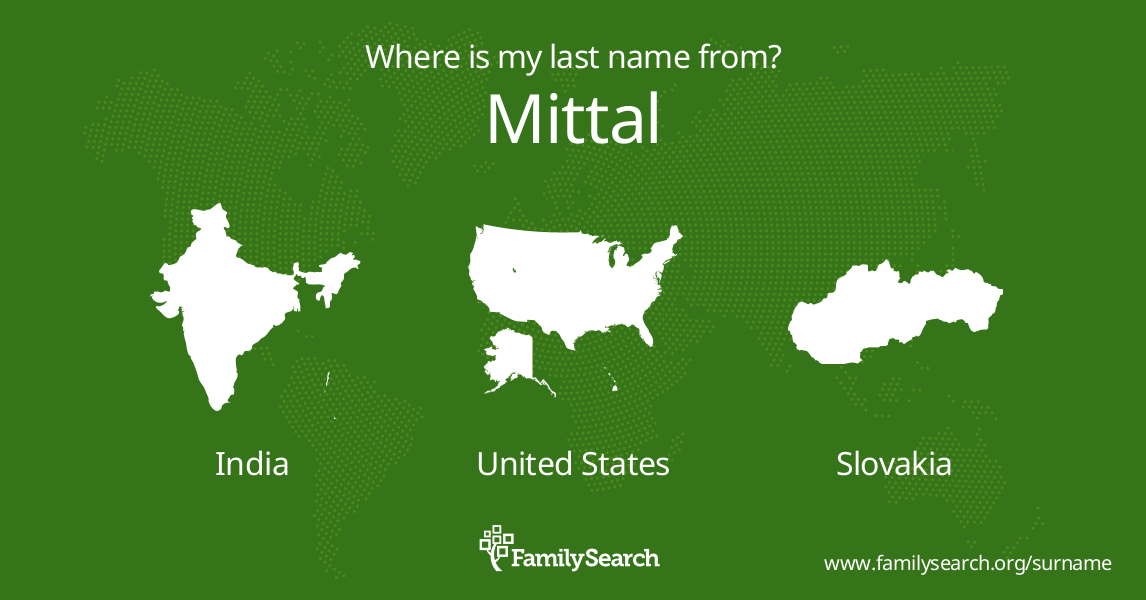
The Mittal surname is commonly recognized in India and around the world, largely due to its association with prominent business figures such as Lakshmi Mittal, one of the wealthiest people in the world. The surname itself is tied to a significant legacy of commerce and entrepreneurship, but it also carries a deep connection to the Vaishya/Bania caste, traditionally linked with trade and business in Indian society. In this article, we explore the origins of the Mittal surname, its ties to caste, and the role it plays within the broader social and economic context of India.
Origins of the Mittal Surname
The Mittal surname is believed to have originated in the northern regions of India, specifically among the Baniya or Vaishya communities, which are traditionally involved in commerce and trade. The term “Mittal” is derived from the word “Mital,” which historically denoted people engaged in various forms of business and trade. The name is widely found in Haryana, Punjab, and Uttar Pradesh, regions known for their merchant and entrepreneurial culture.
Historically, families with the Mittal surname often worked as merchants, bankers, and business owners, amassing wealth through trade, manufacturing, and financial dealings. As India’s economy evolved, many individuals with the Mittal surname transitioned into large-scale industries and international trade. Their business success not only solidified their economic position but also contributed to their prominence within their communities.
Mittal Surname and the Vaishya/Bania Caste
In the context of the Indian caste system, the Mittal surname is most often associated with the Vaishya or Bania caste, two groups traditionally tied to commerce and trade. The Vaishya caste is one of the three higher varnas in Hinduism, primarily focused on trade, agriculture, and finance. This caste is often seen as responsible for maintaining the economic stability of society through their involvement in wealth generation.
The Bania caste, which overlaps significantly with the Vaishyas, is known for its entrepreneurial spirit, and families belonging to this group have historically dominated India’s business sector. Mittals often belong to the Vaishya/Bania category, as their business acumen and success are in line with the traditional roles and responsibilities of this caste.
The Mittal surname, then, is not just a name; it carries with it the weight of this legacy, and individuals with this surname are often considered to be part of the broader entrepreneurial tradition in India. Over time, the distinction between the Bania and Vaishya communities has become blurred, and both groups are generally seen as part of India’s upper-middle-class merchant community.
Prominent Figures with the Mittal Surname
One of the most notable figures bearing the Mittal surname is Lakshmi Mittal, the chairman and CEO of ArcelorMittal, the world’s largest steel producer. Lakshmi Mittal’s rise to prominence is a story of entrepreneurship, perseverance, and global ambition. His success story highlights the ability of the Mittal surname to break into international markets and solidify a place in the global business community.
Under Lakshmi Mittal’s leadership, ArcelorMittal became a major force in the steel industry, contributing to the global economy. Lakshmi’s business empire expanded through acquisitions and strategic investments, ultimately making him one of the richest men in the world. His story is often used as a case study of how individuals from traditional business families can create global empires and change the landscape of industries.
The success of Lakshmi Mittal reflects the larger trends within the Mittal surname and its connection to a tradition of business excellence. Many other members of the Mittal family have also made significant contributions in various industries, ranging from steel manufacturing to real estate development, further cementing the family’s association with entrepreneurship and business success.
Caste Dynamics and Social Structure
The Bania and Vaishya communities, to which many Mittals belong, have historically occupied a specific place in the social hierarchy of India. As business people, they have always been seen as essential to the economic infrastructure of society. These groups, alongside the Brahmins (priests) and Kshatriyas (warriors), make up the upper echelons of the caste system in traditional Indian society.
Despite the rigidity of the caste system, the Bania and Vaishya castes have adapted to modern times, especially as India’s economy has evolved into a global market economy. In the modern context, individuals from these communities are more likely to hold leadership positions in major corporations, both in India and internationally. Many individuals with the Mittal surname represent the upward mobility associated with the Bania/Vaishya caste in today’s world, where business success is no longer bound solely to caste-based roles.
Furthermore, the influence of caste dynamics in Indian society has evolved. Although caste still plays a role in some communities, India’s economic success in the globalized world has led to a more merit-based system, where professional skills, entrepreneurship, and education are increasingly valued over caste identity. The Mittal family is an example of how caste-based roles in business have transformed into global success stories, transcending traditional boundaries.
Variations in Caste Association and Regional Differences
While the Mittal surname is most commonly linked to the Bania and Vaishya castes, there are variations in caste associations based on regional differences. In states like Haryana, Uttar Pradesh, and Punjab, the Mittal surname is firmly associated with the Vaishya/Bania community, but in other regions of India, the surname may be linked to different local castes or sub-castes that also engage in trade and business.
The flexibility of the Bania and Vaishya identity in different parts of India means that individuals with the Mittal surname may identify with a broader range of caste classifications depending on their location and family history. In urban settings, the influence of caste has become less pronounced, and there are many Mittals who focus more on family legacy and business success rather than caste-based identity.
This variability in caste identification, especially in modern times, highlights the fluid nature of caste associations in India. While the Mittal surname has traditional ties to the business community, its associations are not static and can vary depending on cultural context and regional differences.
Conclusion
The Mittal surname is steeped in the tradition of commerce and entrepreneurship, especially tied to the Vaishya/Bania caste, a group historically involved in trade and business. Over the years, the Mittal family, particularly figures like Lakshmi Mittal, has taken this legacy to a global level, proving that the entrepreneurial spirit associated with this surname transcends both geographical and caste boundaries.
While caste dynamics still play a role in some aspects of Indian society, the Mittal surname illustrates how individuals from these traditional communities have adapted to modern economic realities. Today, the Mittal name is synonymous with business success and global expansion, serving as a testament to the power of entrepreneurship and the evolving nature of caste in contemporary India.
In conclusion, the Mittal surname represents not just a traditional caste identity but also a legacy of innovation, leadership, and global impact that continues to shape industries and inspire future generations of entrepreneurs.
Also Read:
