

The automotive industry is going through its biggest shake-up in over a century.
Electric motors are powering the change. Automakers are replacing the combustion engine which is transforming everything from car design to manufacturing to sales.
Here’s the thing:
This change isn’t happening. It has already happened. Electric cars were a novelty 20 years ago. Now they are the future of transportation.
Every major car maker is now racing to electrify.
Here’s your comprehensive guide to electric motors transforming the automotive world… and why you should care.
Inside this guide:
- Why Electric Motors Are Taking Over
- How EV Powertrains Differ From Combustion Engines
- The Impact On Gearboxes And Drivetrains
- Manufacturing And Workforce Changes
- What The Future Holds For Electric Motors
Why Electric Motors Are Taking Over
The reason is simple…
Electric motors are efficient, they’re compact and provide instant torque. Translation: they go faster, cost less to run and have fewer parts that can break.
A combustion engine can have upwards of 2,000 moving components. An electric drivetrain has about 20.
That difference is enormous. Less complexity means:
- Less to go wrong
- Cheaper to maintain
- Easier to manufacture at scale
- Better long-term reliability
Drivers love them too. After driving an EV, you really can’t give up smooth acceleration and a quiet ride. Internal combustion engines just feel ancient.
The statistics support that claim as well. During Q1 2025, electric vehicles accounted for 43% of auto sales worldwide. That’s compared to only 9% in 2019. Quite the increase in a span of six years.
How EV Powertrains Differ From Combustion Engines
EV powertrains are built around three core components:
- The electric motor
- The inverter
- The gearbox
Every piece matters. The motor generates torque. The inverter changes DC power from the battery to AC power for the motor. And the gearbox delivers that power to the wheels seamlessly.
Contemporary electric vehicles use specially designed single-speed gearboxes, unlike most automotive gearboxes you’re familiar with. EV gearboxes are built to cope with the instantaneous torque that an electric motor produces from 0 RPM. Specialist companies like RJW Motors & Inverters manufacture the gearboxes, motors and inverters used in today’s electric vehicle programmes; from passenger EVs through to commercial electric vans and high-performance EVs.
This is why synergy like this is so important. You can’t put a good motor and inverter on a poor performing gearbox and expect your drivetrain to perform to its fullest potential.
Which is why collaborations between automakers and specialist motor and gearbox suppliers have proven so vital in recent years.
The Impact On Gearboxes And Drivetrains
Traditional cars use complicated multi-speed gearboxes…
These have:
- 6 to 10 forward gears
- A clutch or torque converter
- Hydraulic controls
- Lots of moving parts
EVs dispense with all that. Most electric vehicles come with a single-speed gearbox because they don’t need more than one ratio: the electric motor has a broad power band.
That is a major shift.
Suppliers that made conventional gearboxes are shifting production to single-speed EV gearboxes. Entire factories are being retooled. Skills needed. Materials are different. Processes are different.
In some performance EVs, two-speed gearboxes are making a comeback to increase top end speed and efficiency. More high end electric sports cars and commercial vehicles will start following this trend, because every little bit of efficiency helps.
The point is, gearboxes haven’t gone away in the EV era. They’ve just become smarter and far more specialised.
Manufacturing And Workforce Changes
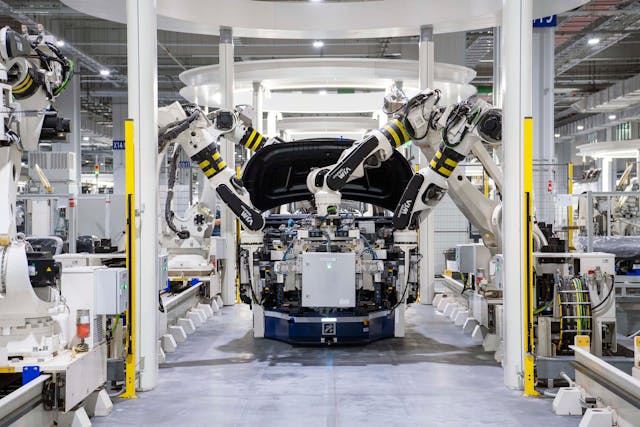
Electric motors are also changing how cars are built and who builds them.
EV manufacturing requires:
- New factories
- New supply chains
- New skills and training
Global EV sales surpassed 17 million units in 2024 — and are set to break 20 million in 2025. Billions of dollars are flowing into new EV production facilities worldwide to meet demand.
That also means there’s a significant workforce transition. Plants that have employed thousands of people over decades to build engines are being retrofitted to make electric motors and batteries. Here’s where new jobs are being created:
- Battery technicians
- Power electronics engineers
- High-voltage system specialists
- EV maintenance technicians
Neither is this a US or European story exclusively. China, South Korea and parts of Southeast Asia are also engaged in massive global build-out of new EV motor and gearbox plants. Whoever ends up dominating the supply of motors and gearboxes will likely dictate the next decade of automotive trade flows.
Consider: Manufacturing a combustion engine and manufacturing an electric motor are entirely different operations. Training would have to be replaced. Tooling would have to be replaced. Supply chains would have to be replaced wholesale.
For workers and manufacturers who adapt early, the opportunity is huge.
What The Future Holds For Electric Motors
So where is all of this going?
Electric motors are only going to increase in relevance from this point forward. In 2025, the worldwide EV market had a valuation of approximately USD 1.6 trillion. It is expected to expand at an accelerated rate through 2030.
A few key trends are shaping the next 5 to 10 years:
- Higher motor efficiency: New motor designs are pushing efficiency past 97%
- Better gearboxes: Two-speed and multi-speed EV gearboxes are coming back for performance gains
- Simpler designs: Integrated e-axles combine the motor, inverter and gearbox into a single unit, removing the need to place them separately
- Localised supply chains: Countries are developing their own motor and gearbox manufacturing capabilities
Gas guzzlers are going electric, too. Sports cars are pairing quick motors with smart transmissions to achieve numbers internal combustion can’t touch — and at a fraction of the operating expense.
The bottom line? It’s only going to improve, cost less money, and become more widely available. And it’s going to push combustion engines further into retirement every year.
The Road Ahead
Electric motors are no longer a future technology… they are the present.
They’re disrupting every aspect of the auto industry – design, production, gearboxes, supply chains and the talent that drives them. Here’s a quick recap:
- Electric motors are replacing combustion engines at record pace
- Specialist gearboxes, motors, and inverters are now the new core of every car
- Manufacturing and workforce skills are being rebuilt from the ground up
- The global market is growing fast and shows no sign of slowing down
The automotive industry is undergoing a revolution that happens once every 100 years. For car makers, suppliers and drivers alike, it will be the companies who embrace electric motor tech at speed that will lead the next age of transportation.
